01 / 05
Connect the machine with your code
You or your developer installs 1adk-agent using the instructions in your account. Your own Claude Code, Codex or another coding agent studies the code.

For software product owners
Understand how your product works, what changed after your team’s work and which questions to discuss with your developer. Keep that picture for your next decisions.
Two analyses and a comparison — free. No source code is sent to 1ADK.

One request, from a person to classes. Each level reveals the detail inside the previous one.
An illustrative C4 model, not a scan of your system or live request monitoring. Select a level to explore it. Code shows class structure, not source code being sent to 1ADK. Flying documents symbolically connect technical descriptions to objects on the map.
Working situations
Use the technical picture to discuss results, get an outside perspective and pass knowledge to the next team.
Show your client work inside the system: new components, changed connections and questions that still need answers.
The analysis runs on the owner’s side. Discuss the approved system description and evidence with your consultant.
Capture components, dependencies and open questions before your developer leaves or you change agencies.
How it works
Your agent performs the analysis. Return to the shared picture in 1ADK to check evidence, prepare questions for your team and compare the result with the next analysis.
01 / 05
You or your developer installs 1adk-agent using the instructions in your account. Your own Claude Code, Codex or another coding agent studies the code.
02 / 05
It identifies components, their purpose and their connections. It records where each conclusion comes from and what remains unknown.
03 / 05
1ADK receives component names, purposes, relationships and evidence references. A structured description can still contain sensitive information.
04 / 05
Components, interfaces, evidence and questions are collected in one place. Inspect a finding and see what is missing from a confident answer.
05 / 05
Run another analysis after changes. Discuss what appeared, changed or is no longer confirmed. The second analysis and comparison are free.
The owner does not need to read code. Starting an analysis takes someone with access to the project and a coding agent — you or your developer.
Your project provides the machine connection instructions. No credit card or call is required to start free.
The person with code access installs and runs 1adk-agent in their own terminal, then starts the analysis in their coding agent using the instructions in the account.
Open the map, evidence and questions. After work on the project, run the second analysis and compare the two states.
I would like a technical picture of our project in 1ADK. Let’s agree which machine with the code to use. The project account provides instructions: install and connect 1adk-agent, then run the analysis with a coding agent. Only the structured description should reach 1ADK, without source code or secrets. After changes, we can run another analysis and discuss the difference.
Free includes two analyses of one project and a comparison. Your coding agent’s costs are not included in a 1ADK plan. The structured description can also contain sensitive information.
Try it freeWhat becomes visible
A picture assembled from what your agent found in the repository. Uncertain parts remain visibly uncertain.
Understand which parts deliver the function you care about and how they connect.
What is in the project, why each part exists and what it connects to.
Check where a finding came from using the file, configuration and document references recorded by the agent.
Prepare your team discussion: what remains unknown and what evidence would help establish it.
Discuss the sprint using two analyses: what appeared, changed or stopped being confirmed.
Understanding stays with the owner and helps the next team.
1ADK does not write code, scan for vulnerabilities or replace human technical judgement. The picture helps you ask precise questions and check the answers.
Behind the conclusion
Real screens from the open 1ADK demonstration. Orbita Billing is an invented project, not a customer system.
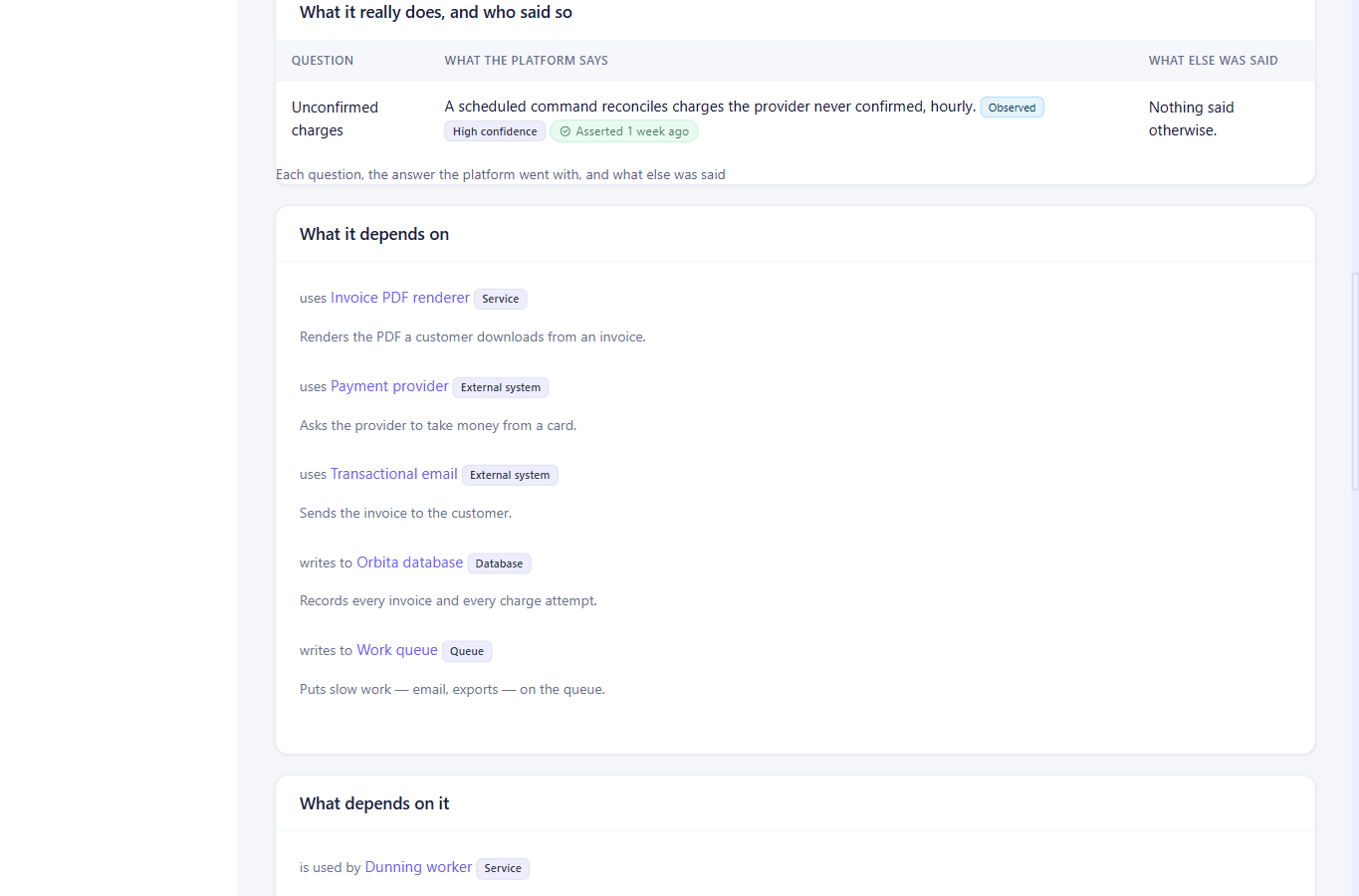
Check a claim
When a claim can be supported, 1ADK shows the evidence reference. When it cannot, the question stays open.
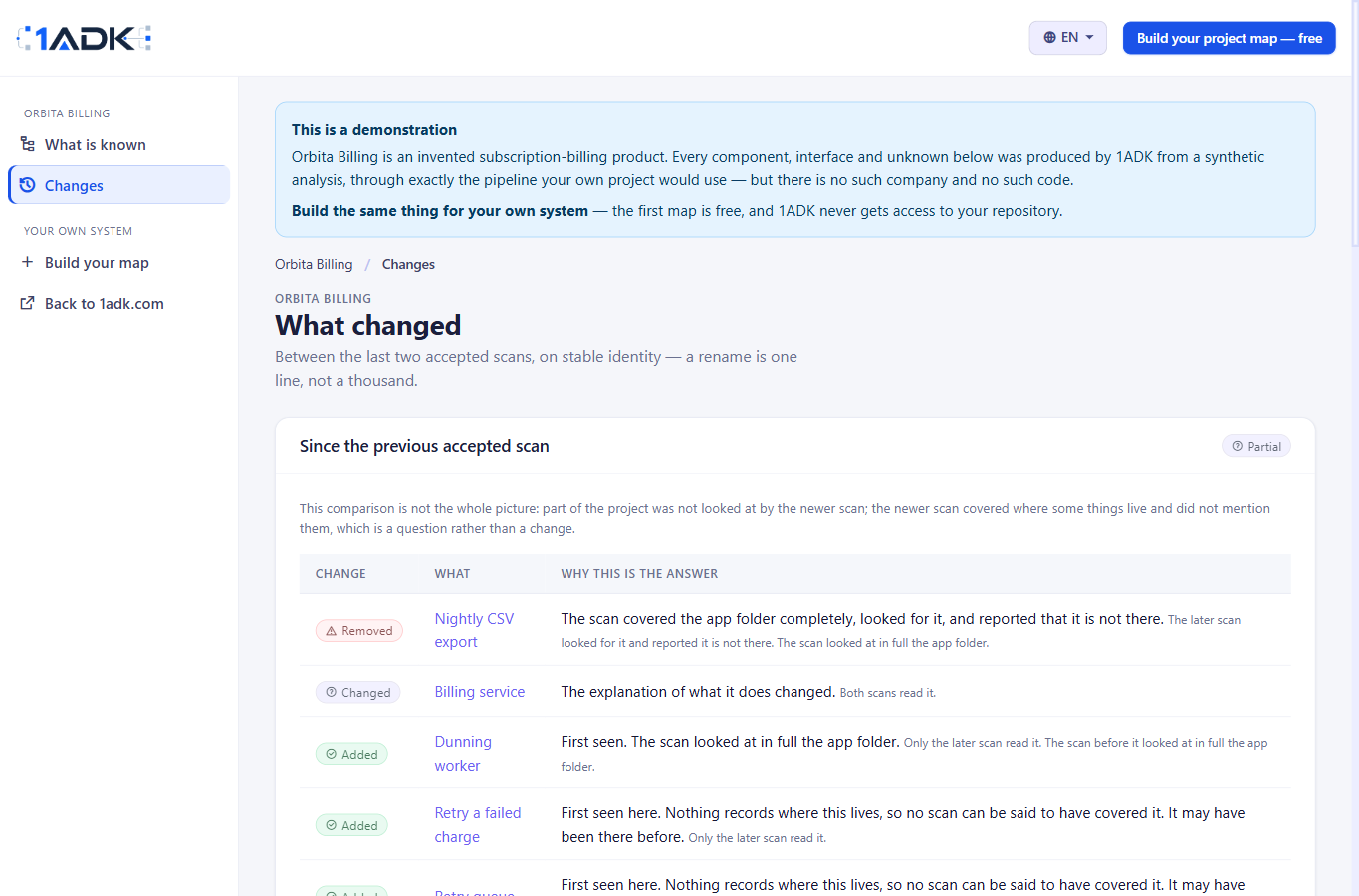
Compare two analyses
Changes inside the system become visible too. A new connection, a changed component and an unconfirmed part have distinct places in history.
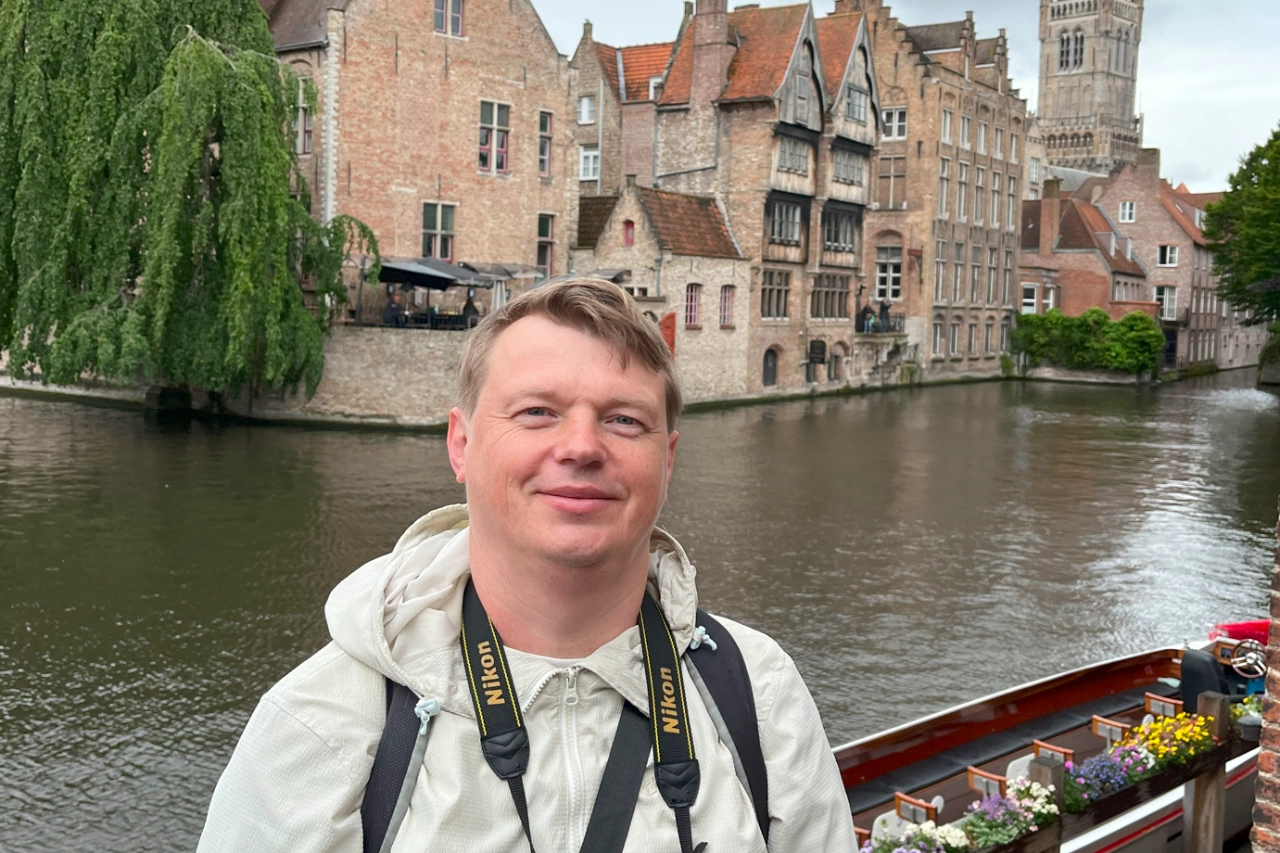
The person behind 1ADK
I have spent the last years working on software systems whose owners could not answer basic questions without the person who wrote the code. 1ADK grew out of that problem.
About the project and founderStart with a question
Free tools help you understand your dependency on a developer and prepare questions for the team.
No account. Your answers stay in the browser.
Understand it step by step
What to ask, what to check and how to keep the knowledge.
Pricing
First analysis → work on the project → second analysis → discuss the changes. The first two analyses are free. Subscribe for further updates and history.
Two analyses
Understand what you have and see the first change.
Keep it current
Keep the technical picture of an active project current.
Several projects
Keep the technical picture of several systems current.
Start free without a credit card or a call. Paid plans are currently activated on request; payment terms are agreed in advance.
Prices are in USD and do not include tax.
Before you start
Your agent performs the analysis. 1ADK brings the result into a map with evidence and open questions. Return to it, discuss it with your team and compare it with the next analysis.
No. 1ADK does not receive repository credentials, SSH access or access to production. Your coding agent reads the code; 1ADK receives a structured description.
Claude Code, Codex or another coding agent on the machine where the code already lives. You, your developer or your agency runs it.
No source code is uploaded to 1ADK. Component names, routes and architecture details can still be sensitive. Consider that before sending a description.
The map, history and evidence help you review the result. 1ADK does not promise fully automatic acceptance or make a technical decision for you.
The software you own
Build your first map. After changes, run your second free analysis and inspect the difference. The result remains available to read.
Try it free No source code sent to 1ADK. No credit card.